
Made by hand in BresciaEvery product page states the working days. From 3 to 270.Leather with a C.I.T.E.S. registration numberMeasuring at your home, or on a video call.

Two partners, one bench, a trade that was disappearing

Opened around 2001 in piazza Tebaldo Brusato. Today at Via XX Settembre 38, in the centre of Brescia.

The story

What follows is drawn from the two newspaper articles of 2008 and 2011, further down this page with their original scans.

Domi Gezim learned to work skins in the family, in Albania. Around 2001 he opened the workshop.

At the bench beside him, Paraschiva Burbulea, known in Brescia as Cristina. Romanian, she arrived in Italy with the trade already in her hands. In 2008 a local paper described her as one of the few women in Brescia, if not the only one, making shoes by hand and to measure.

The first address was piazza Tebaldo Brusato. In the window, beside a belt made from the skin of a newborn crocodile, stood a pair of shoes covered entirely in pearls, made for a bride.

Then the move to Via XX Settembre. The address changed, the method did not: the same hands, the same bench, the same tools.

The two partners toiled and suffered to get the shop on its feet and to become known in the city, but it is wonderful today to be able to answer the requests for advice that come from our loyal customers.

Press article, 7 February 2011

The people

The shoemaker at work in the Brescia workshop

Whoever answers the phone is the same person who cuts the leather. Whoever measures you is the one who will stitch the sole.

It is a trade learned from the inside. Courses exist, but to specialise you have to roll up your sleeves.

Industry won: eighty per cent of customers prefer the industrial shoe. We work for the remaining twenty, and for those who did not know an alternative existed.

Company details
SCARPEFATTEAMANO DI DOMI GEZIM
Registered address
Via XX Settembre, 38, 25121 Brescia
VAT number
04387190988

I like putting an old ruined pair back together. It is a real satisfaction. Sometimes the customer does not even recognise them, and leaves here happy.

Press article, 7 March 2008

The craft

Designers, draughtsmen and pattern makers. The whole cycle, from the measurement to the stitched sole.

First the feet are measured. Then, with the customer, the skin is chosen. The pattern is drawn straight onto the leather and cut. The upper is made, the leather is pulled over the last, the parts are joined, the sole is stitched.

An ordinary pump takes at least 48 hours of work. The sewing machine is a tool; the decision stays with the hand.

Materials of the first quality, chosen by the customer along with the design. The model is conceived on the customer's instruction, for one person only.

  1. 01MeasuringIn the workshop, at your home or on a video call. Standing, weight on both feet.
  2. 02LastThe wooden last, built to the customer's measurement. The last makes the shoe.
  3. 03CuttingThe pattern is drawn on the skin and cut by hand, following the grain of the leather.
  4. 04LastingThe upper is pulled over the last, the lining goes in, the sole is stitched.
  5. 05FinishingEdges, polishing, final check. Only then does the shoe leave the bench.

Press

The original scans are kept in the workshop archive.

Newspaper article of 7 March 2008 about the workshop

Quando la scarpa è... donna

I love my work very much. I draw the shoes, I choose the leather, and then I make them. Someone once told me that in my shoes they feel like they are flying.

The shop and workshop in piazza Tebaldo Brusato, the 48 hours for a pump, the requests from brides, the customers with foot problems.

Read the transcript7 March 2008

Non solo abiti su misura. Ma anche scarpe. E perché no, pure borse, cinture o giubbini in pelle.

Paraschiva, conosciuta anche come Cristina, rumena di 37 anni, da sei realizza stivali, mocassini, decolleté in base alle esigenze dei clienti, nel negozio-laboratorio di piazza Tebaldo Brusato dove lavora con un collega albanese. Attorno a lei sagome di legno, pelli, tacchi, martelli e pinze, colle e chiodi, oltre che decine e decine di calzature sparse sulle tavole di legno.

Una passione la sua, che la tiene occupata per buona parte della giornata, nonostante a casa l’aspettino il marito e le due figlie di 13 e 17 anni. «Amo molto il mio lavoro, racconta con il sorriso sulle labbra. Disegno le scarpe, scelgo il pellame, e poi le realizzo. La soddisfazione più grande è quella di vedere la gente che esce soddisfatta dal mio negozio. Qualcuno è arrivato a dirmi che con le mie scarpe si sente volare».

Per creare una calzatura, Paraschiva prima prende le misure dei piedi, quindi insieme al cliente sceglie che tipo di pelle utilizzare. Disegna il modello sul pellame e poi lo taglia, realizza la tomaia e poi tira la pelle sulla sagoma, per far prendere la forma desiderata, unisce le due parti e quindi cuce la suola.

Diversi passaggi, che richiedono tempo. «Per un normale decolleté ci vogliono almeno 48 ore di lavoro».

Qualcuno è arrivato a chiedercene anche in coccodrillo bagnato da una lamina d’oro. Certo, chi è benestante può permettersi di rivolgersi a Paraschiva, ma non solo, si conferma la 37enne rumena: «Molti vengono nel mio negozio perché hanno dei problemi ai piedi, e con le scarpe normali non riescono a camminare. Alcuni ad esempio devono portare dei plantari. Le spose poi ci chiedono scarpe dello stesso tessuto del vestito, ma sono soprattutto gli uomini che si rivolgono a noi. Qualcuno ci chiede dei rialzi, ad esempio».

Spesso succede che siano i clienti a chiedere modelli particolari, altre volte è Paraschiva che li pensa, e poi li realizza: «Non riesco a fare altro se non un modello che ho in mente. Provo e riprovo finché non trovo il modo per crearlo. Come per le scarpe con le perle, particolarmente adatte ad una sposa». Il piede infatti è interamente coperto di perle, una calzatura assolutamente unica e molto preziosa, che fa bella mostra di sé nella vetrina del negozio «Alba» in piazza Tebaldo Brusato, accanto ad una cintura realizzata con la pelle di un coccodrillo appena nato.

Una stilista che fa anche il calzolaio. Paraschiva, una delle poche donne a Brescia, se non addirittura la sola, che fa scarpe a mano e su misura. «Mi piace rimettere a posto un paio di vecchie scarpe distrutte. È una bella soddisfazione. A volte il cliente non le riconosce nemmeno, ed esce da qui contento».

Newspaper article of 7 February 2011 on the passion for handmade shoes

La passione delle scarpe fatte a mano

Footwear for men, women and children, orthopaedic or wedding shoes, accessories that can come out of nothing or out of a repair.

It places the opening of the workshop ten years earlier, around 2001, and records where the two partners stood against industry.

Read the transcript7 February 2011

«La gioia più grande è vedere, a lavoro finito, cosa ho potuto realizzare con le mie mani. E ogni volta non vedo l’ora di rimettermi all’opera». Si legge negli occhi, a Cristina, la passione che nutre per il suo lavoro. Una passione che ha trovato voce dieci anni fa, quando il socio Domi ha aperto la bottega Alba, scarpe fatte a mano.

Calzature per uomo, donna e bambino, scarpe ortopediche o per matrimoni, accessori che possono nascere dal nulla o da riparazioni. Ora tradizionali ora particolari, adornate da scritte o disegni, in tinta magari con un abito o abbinate a cinture, borse o pochette, anche queste ultime realizzate nel laboratorio di piazza Tebaldo, in base al gusto del singolo cliente. A questo si dedicano i due soci, rammaricati dall’attuale situazione dei mestieri artigianali. «Stanno scomparendo» dicono, in Italia come in Romania, patria di Cristina, o in Albania, dove Domi ha appreso a lavorare le pelli in famiglia.

«L’industria ci ha battuto, ammettono. L’80% della clientela preferisce la scarpa industriale». Il valore aggiunto della calzatura fatta a mano è però in primo luogo «la stabilità della postura, essendo fatta appositamente sul piede di chi la deve indossare, insieme alla materia prima, di primissima scelta».

Cristina e Domi sono «stilisti, disegnatori e modellisti, forse gli unici in Europa a trattare tutti i pellami e realizzare scarpe per tutti i target, aggiungono. Esistono dei corsi ma per specializzarsi nel settore è necessario rimboccarsi le maniche. Non è un lavoro difficile ma richiede passione e buona volontà». I due soci hanno «faticato e sofferto» per mettere in piedi il negozio e per farsi conoscere in città ma «è bellissimo oggi poter rispondere alle richieste di un consiglio formulate dai nostri clienti affezionati, conclude Cristina. È un lavoro che amo molto».

Inside the workshop

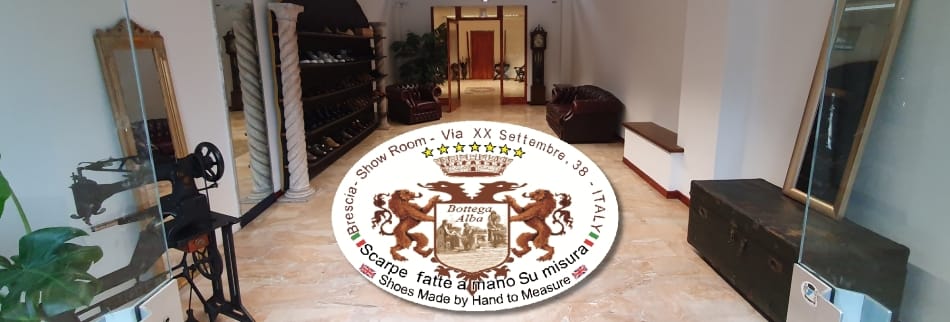
Entrance to the Brescia atelier: pale marble floor, shelves of finished shoes, a vintage sewing machine
Via XX Settembre, 38, 25121 Brescia

By appointment is best: when we are at the bench, the doorbell goes unanswered.

The bench is in plain sight

The workshop is not a hidden back room: everything passes through it. If you want to understand why a handmade shoe costs what it costs, watch one being made. Open on Saturdays too, best by appointment: when we are at the bench, the doorbell goes unanswered.

Search

Cart

0 items